New Patient Offer FREE Initial Consultation (Normally $150)

Women's Health & Menstrual Disorders Acupuncture in Richmond, VA

Taylor Krafcik, L.Ac. | Vitality Acupuncture & Natural Medicine | Richmond, Chesterfield & Central Virginia

Women’s menstrual and reproductive health is one of the areas where Chinese medicine has its deepest and most clinically developed tradition. For thousands of years, Chinese medicine practitioners have treated the full arc of women’s health — from menstrual disorders through fertility, pregnancy, and the transitions of perimenopause and menopause — with a diagnostic precision and clinical effectiveness that conventional medicine is only beginning to document through research.

Taylor Krafcik, L.Ac. treats women with painful or irregular periods as a core part of his practice at Vitality Acupuncture & Natural Medicine in Richmond, Virginia. His approach combines the diagnostic precision of traditional Chinese medicine pulse assessment and pattern differentiation with the clinical pragmatism of a practitioner who has spent twelve years working with the full range of menstrual presentations. He serves patients across Richmond, Chesterfield, Bon Air, Midlothian, Powhatan, Henrico, Short Pump, Glen Allen, and Central Virginia.

Why Chinese Medicine for Women's Health?

Chinese medicine approaches menstrual disorders through a diagnostic framework that looks at the whole pattern of a woman’s health — the quality and quantity of her period, the timing and regularity of her cycle, the accompanying symptoms, the relationship between her menstrual health and her overall constitution — rather than treating individual symptoms in isolation.

This whole-pattern approach is particularly valuable for the kinds of menstrual presentations that conventional medicine often manages rather than resolves. Hormonal contraceptives address menstrual pain by suppressing the hormonal cycle entirely — they manage the symptom rather than addressing the pattern that produces it. When the contraceptive is discontinued, the underlying pattern typically returns. Chinese medicine aims to change the pattern itself, producing lasting improvement rather than symptom management that requires ongoing pharmaceutical maintenance.

For women who prefer to avoid hormonal intervention — whether due to side effects, fertility goals, personal preference, or concerns about long-term hormonal exposure — acupuncture and Chinese herbal medicine offer clinically validated, non-hormonal alternatives for the full range of menstrual and reproductive health presentations.

Conditions Treated

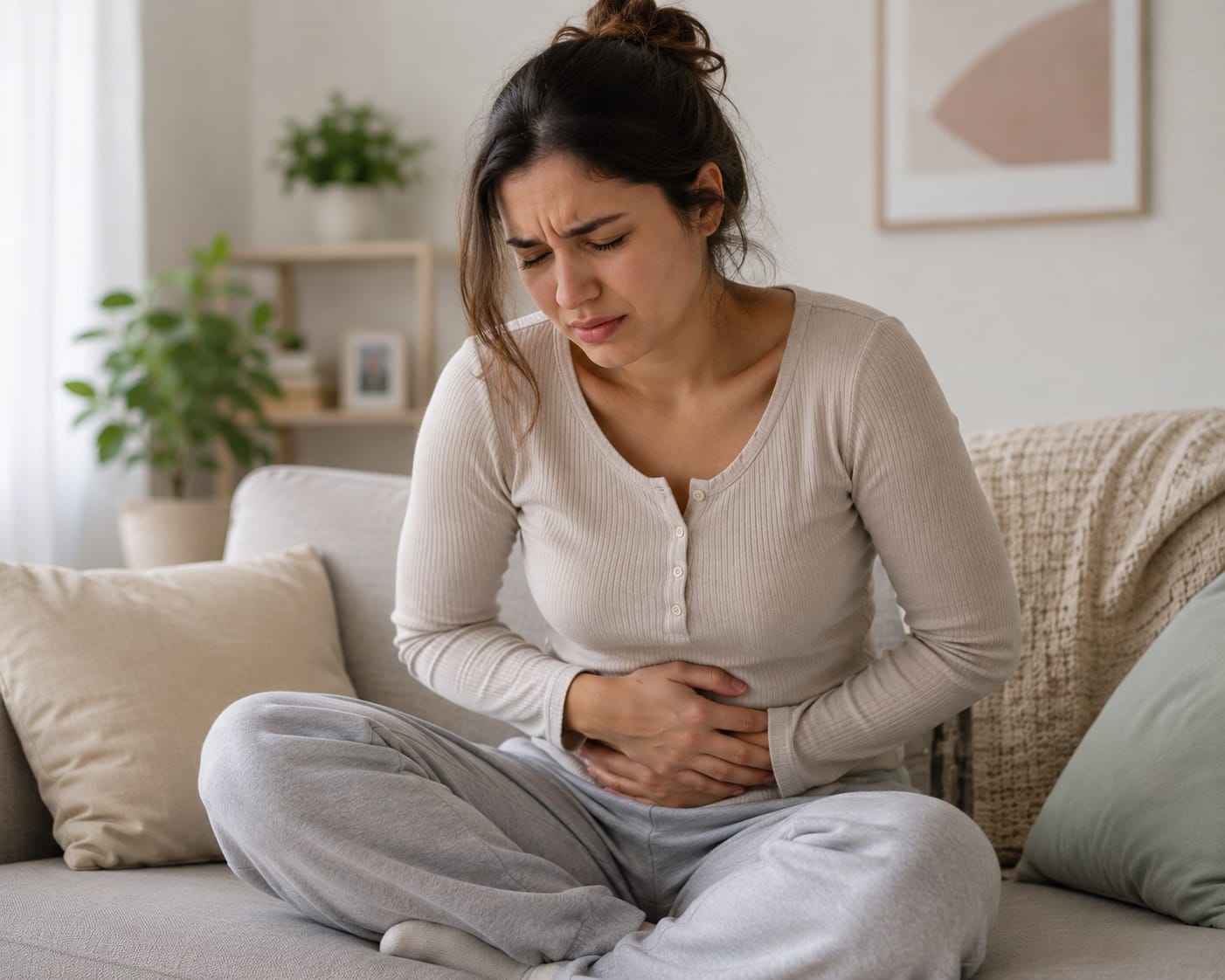
Painful Periods (Dysmenorrhea)

Menstrual pain is among the most common presentations Taylor works with and among the most consistently responsive to Chinese medicine treatment. In Chinese medicine, painful periods are understood as a failure of free flow — Qi and Blood that are not moving smoothly through the reproductive system, producing the cramping and pain that characterize dysmenorrhea. The diagnostic question is why the flow is restricted — whether from Cold, from stagnation, from deficiency — and the treatment is tailored to the specific pattern rather than applied generically.

Both primary dysmenorrhea (painful periods without identifiable structural cause) and secondary dysmenorrhea (painful periods associated with endometriosis, fibroids, or other structural conditions) respond to acupuncture treatment, though the treatment approach and expected timeline differ. For women with endometriosis-related pain specifically, acupuncture and herbal medicine address both the pain and the underlying inflammatory process that drives endometriosis progression.

Irregular Periods

Irregular periods — cycles that are unpredictably long or short, that arrive without regularity, or that vary significantly in duration and flow — reflect an underlying imbalance in the hormonal regulation that governs the menstrual cycle. Chinese medicine’s pulse diagnosis and pattern differentiation allow Taylor to identify the specific constitutional imbalance driving the irregularity and address it at the root.

Irregular periods are among the most diagnostically informative presentations in Chinese medicine — the pattern of irregularity tells the practitioner a great deal about the patient’s overall constitutional health and the direction of treatment. For women trying to conceive, regular predictable cycles are a prerequisite for natural conception and for optimizing timing with assisted reproductive technologies.

PMS & Premenstrual Dysphoric Disorder

The premenstrual phase — the week or two before the period arrives — produces a characteristic set of symptoms in many women: mood changes, irritability, bloating, breast tenderness, headaches, food cravings, fatigue. In Chinese medicine, these premenstrual symptoms reflect the Liver’s difficulty in smoothly transitioning into the menstrual phase — a pattern of Liver Qi stagnation that is both one of the most common presentations in modern women and one of the most responsive to acupuncture treatment.

For women with premenstrual dysphoric disorder (PMDD) — a severe form of PMS involving significant mood disruption that impairs daily functioning — acupuncture and Chinese herbal medicine offer a non-pharmaceutical approach that addresses the pattern rather than managing it with SSRIs or other mood medications.

For patients whose premenstrual mood symptoms intersect with anxiety or depression outside the premenstrual window, see:

Acupuncture for Anxiety & Emotional Health in Richmond, VA

PCOS (Polycystic Ovarian Syndrome)

Polycystic ovarian syndrome is one of the most common hormonal disorders in women of reproductive age and one of the most complex presentations in clinical practice. PCOS involves a combination of hormonal dysregulation — typically elevated androgens, disrupted LH/FSH ratios, and insulin resistance — that produces the characteristic constellation of irregular or absent periods, polycystic ovaries, acne, excess hair growth, and weight management challenges.

Acupuncture and Chinese herbal medicine address PCOS through multiple mechanisms: regulating the hypothalamic-pituitary-ovarian axis that governs hormonal production, improving insulin sensitivity, reducing androgen levels, and restoring normal ovarian function. For women with PCOS who are trying to conceive, these interventions can restore ovulatory function and create the conditions for natural conception. For women who are not trying to conceive, they address the metabolic and hormonal dimensions of PCOS that affect quality of life and long-term health.

Perimenopause & Menopause

The hormonal transition of perimenopause and menopause produces a range of symptoms — hot flashes, night sweats, sleep disruption, mood changes, vaginal dryness, brain fog, joint pain — that significantly affect quality of life and for which many women prefer non-hormonal management. Acupuncture has a growing evidence base for menopausal symptom management, with multiple randomized controlled trials documenting its effectiveness for hot flashes, sleep disruption, and mood symptoms specifically.

Chinese medicine understands the menopausal transition as a natural but sometimes turbulent shift in the body’s fundamental constitutional balance — one that can be supported and smoothed through treatment rather than simply suppressed through hormone replacement. Taylor’s approach supports the transition while addressing the specific symptoms that are most disruptive for each patient.

Heavy Bleeding (Menorrhagia)

Heavy menstrual bleeding — prolonged periods, flooding, or blood loss significant enough to cause fatigue, anemia, or social disruption — has specific Chinese medicine presentations that respond well to herbal medicine in particular. The combination of acupuncture and targeted herbal formulas addresses both the immediate excess of blood loss and the underlying constitutional pattern that is producing it.

Women's Health & Menstrual Disorders Acupuncture in Richmond, VA

How Acupuncture Works for Pain

Acupuncture stimulates the central nervous system to release endorphins, enkephalins, and other endogenous opioids — the body’s own pain-reducing chemicals — in the brain, spinal cord, and peripheral nervous system. This is not a metaphorical mechanism. It is a documented neurochemical process confirmed by multiple decades of research, including studies that show acupuncture’s effects on pain are reversed by naloxone (an opioid antagonist), confirming that the endogenous opioid system is genuinely being activated.

Beyond the endorphin mechanism, acupuncture modulates the autonomic nervous system — shifting the balance from sympathetic (threat response) toward parasympathetic (rest and repair) activation — which reduces the inflammatory state that perpetuates chronic pain. It also improves local blood flow to injured and restricted tissues, supporting the healing processes that chronic pain presentations often require.

The motor point mechanism is more direct: precise needling of an inhibited motor point produces the mechanical release of muscle contraction patterns that are generating pain and dysfunction. This produces immediate, verifiable results — the patient can test their range of motion or pain level before and after needle placement and confirm the change on the table.

What Patients Say

“Dr Taylor at Vitality is amazing, accurate, knowledgeable and kind. One visit took away years of hip pain! He does a thorough intake, health history & TCM physical including pulse assessment, and then decides which acupuncture points to treat — and he often teaches us what he’s doing and why as he works. He reassesses every single visit. Because of you I’m walking again.” — Molly

“Since starting acupuncture, I no longer suffer from insomnia, night sweats, or back pain. I have been able to completely eliminate two prescription medications, for which I am so grateful.” — Wendy

“I suffered with a constant phantom pain in my leg after having it amputated. After a few acupuncture treatments with Taylor, I began experiencing less phantom pain. Now, I have no phantom pain and am able to sleep through the entire night.” — Linda

“I was so skeptical of acupuncture. I had experienced pain in my joints for many years. Steroid injections were not helping. Taylor worked his magic and reduced my pain level so much! I am now enjoying life again.” — Ramon

Frequently Asked Questions​

How many sessions does it take to see results for pain?

Many patients notice significant improvement within the first one to three sessions, particularly for acute presentations and for musculoskeletal pain where motor point techniques are applicable. Chronic pain that has been present for years typically requires a longer course of treatment — six to twelve sessions is a reasonable expectation for significant, durable improvement in most chronic pain presentations. Taylor will give you a realistic assessment at your initial visit based on your specific presentation.

Can acupuncture help if I’ve already had surgery?

Yes. Acupuncture is often particularly valuable for post-surgical pain and restricted recovery, addressing the scar tissue formation, muscle inhibition, and residual pain patterns that surgery leaves behind. Many patients find that acupuncture accelerates rehabilitation and addresses the residual symptoms that physical therapy has not been able to fully resolve.

Is acupuncture safe to use alongside medications for pain?

Yes. Acupuncture works through different mechanisms than pharmaceutical pain management and is safe to use alongside NSAIDs, muscle relaxants, opioids, and other pain medications. Many patients use acupuncture to reduce their reliance on pain medication — Wendy’s experience of eliminating two prescription medications is not unusual. Taylor will take a complete medication history at intake and will flag any relevant considerations.

Does acupuncture hurt?

Acupuncture needles are hair-thin — approximately 25 times thinner than a hypodermic needle — and most patients describe the sensation as minimal to negligible. Some points produce a sensation of pressure, warmth, or a brief dull ache as the needle activates the point — these sensations indicate that the needle is engaging the therapeutic mechanism. Most patients find acupuncture deeply relaxing rather than painful.

Frequently Asked Questions​

How many sessions does it take to see results for pain?

Many patients notice significant improvement within the first one to three sessions, particularly for acute presentations and for musculoskeletal pain where motor point techniques are applicable. Chronic pain that has been present for years typically requires a longer course of treatment — six to twelve sessions is a reasonable expectation for significant, durable improvement in most chronic pain presentations. Taylor will give you a realistic assessment at your initial visit based on your specific presentation.

Can acupuncture help if I’ve already had surgery?

Yes. Acupuncture is often particularly valuable for post-surgical pain and restricted recovery, addressing the scar tissue formation, muscle inhibition, and residual pain patterns that surgery leaves behind. Many patients find that acupuncture accelerates rehabilitation and addresses the residual symptoms that physical therapy has not been able to fully resolve.

Is acupuncture safe to use alongside medications for pain?

Yes. Acupuncture works through different mechanisms than pharmaceutical pain management and is safe to use alongside NSAIDs, muscle relaxants, opioids, and other pain medications. Many patients use acupuncture to reduce their reliance on pain medication — Wendy’s experience of eliminating two prescription medications is not unusual. Taylor will take a complete medication history at intake and will flag any relevant considerations.

Does acupuncture hurt?

Acupuncture needles are hair-thin — approximately 25 times thinner than a hypodermic needle — and most patients describe the sensation as minimal to negligible. Some points produce a sensation of pressure, warmth, or a brief dull ache as the needle activates the point — these sensations indicate that the needle is engaging the therapeutic mechanism. Most patients find acupuncture deeply relaxing rather than painful.

Insurance & Fees​

Taylor’s practice is cash-pay with expanded insurance access

VA Community Care Network — Veterans receive treatment at no cost through VA referral. Taylor is in-network with the VA, meaning veterans in Richmond and the surrounding area can access his care through their existing VA benefits.

Humana — Taylor is in-network with Humana. Contact the office for current status and if your specific plan is eligible for acupuncture coverage.

Learn more about Taylor Krafcik, L.Ac.

Related Articles

Taylor Krafcik, L.Ac. — Acupuncture & Natural Medicine in Richmond, VA

SAAT Acupuncture — Food Allergies & Alpha-Gal in Richmond, VA

Women’s Health & Menstrual Disorders Acupuncture in Richmond, VA

Acupuncture for Anxiety & Emotional Health in Richmond, VA

Alpha-Gal Syndrome Treatment in Richmond, VA

Have a Question? Contact Us